
Home > Conditions & Specialisms > Learning Disabilities & Autism
Learning Disabilities & Autism Support at Home
Person-centred support that promotes independence, choice, and inclusion — helping people with learning disabilities and autism live the life they want, in the place they call home.
Our Approach
Every person with a learning disability or autism is an individual — with their own strengths, their own preferences, their own ambitions, and their own way of seeing the world. Our role is not to define what someone's life should look like. Our role is to provide the support that helps them live the life they choose.
At Kays 24-7 Care Services, we deliver person-centred support that puts the individual at the centre of every decision. We work alongside the people we support, their families, social workers, and other professionals to create outcome-focused support plans that build independence, promote choice, and open doors to the community.
We believe in enabling, not doing. In encouraging, not directing. In listening, always. Whether someone needs a few hours of support each week or a comprehensive daily package, our approach remains the same — respectful, empowering, and built entirely around the person.

What Our Support Includes
We tailor every support package to the individual. No two plans are the same. Our support workers can help with:
Daily Living Skills
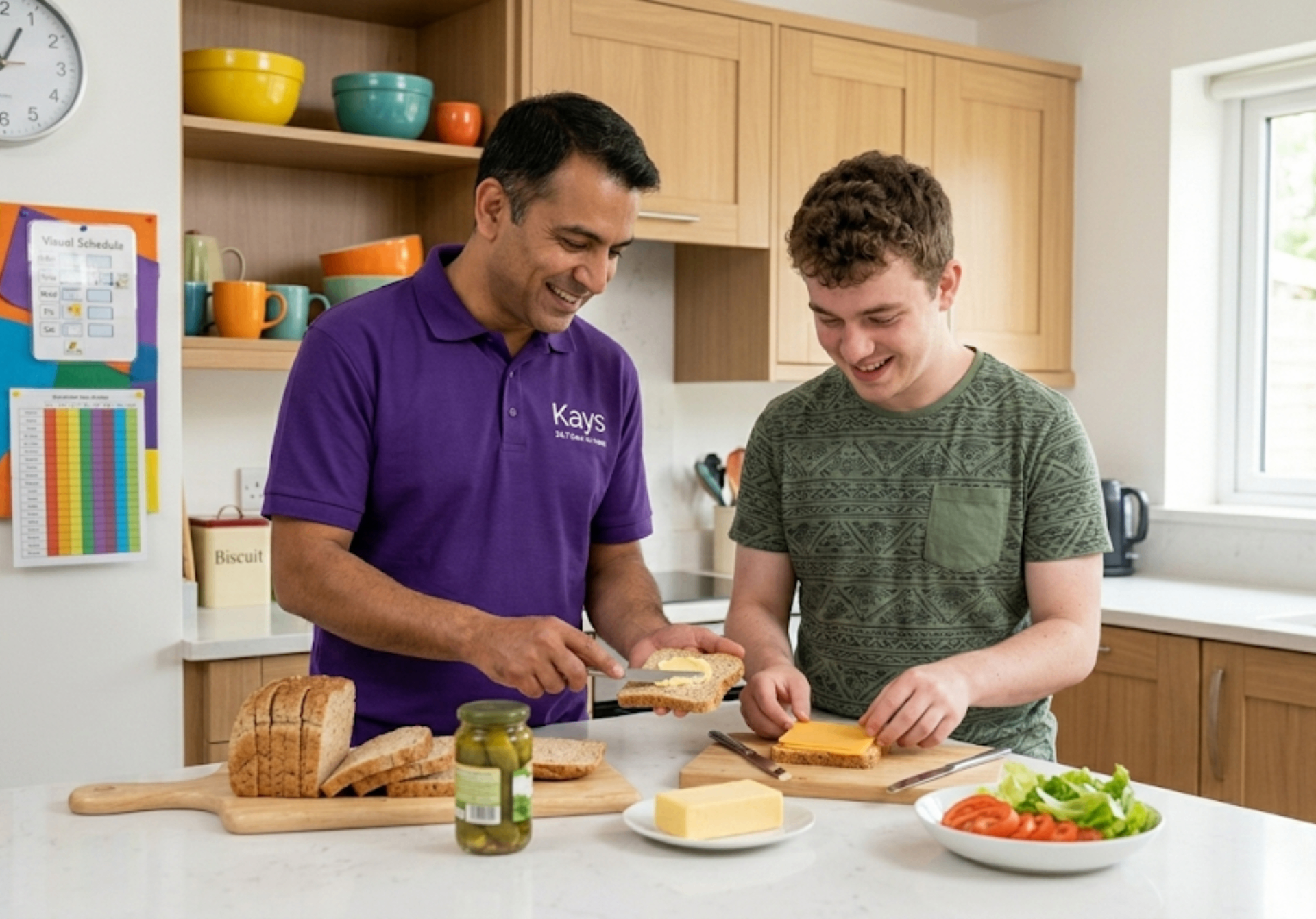
Cooking, cleaning, laundry, personal hygiene, and managing a household. We work with the person to develop and practise these skills at their own pace, building confidence and independence over time.
Personal Care
Where needed, discreet and dignified support with washing, dressing, grooming, and toileting — always delivered with respect, patience, and sensitivity to the individual's preferences and communication style.
Community Access & Social Activities
Accompanying people to social groups, leisure centres, cafés, shops, libraries, places of worship, and community events. We help people stay active, make friends, and feel part of the world around them.
Health & Wellbeing
Supporting attendance at GP and hospital appointments, monitoring health and wellbeing, encouraging healthy eating and exercise, and liaising with healthcare professionals on the person's behalf.
Budgeting & Money Management
Helping with managing money, paying bills, understanding bank statements, and building the financial skills needed for greater independence.
Communication Support
Adapting our communication to each person's needs — using easy read materials, visual aids, social stories, Makaton, or other communication tools as appropriate.
Behavioural Support
For individuals who may display behaviour that challenges, our support workers are trained in positive behaviour support, de-escalation, and understanding the root causes of distress.
Building & Maintaining Relationships
Supporting people to develop friendships, maintain family connections, and navigate social situations with confidence and safety.
Understanding & Supporting Autism
Autism is a neurological difference, not a deficit. Autistic people experience the world differently — processing sensory information, social interaction, and communication in their own way. Our support is designed to work with each person's unique profile, not against it.
Sensory Awareness
Our support workers are trained to understand sensory sensitivities and to adapt the environment and their approach accordingly. We learn what each person finds overwhelming, calming, or stimulating, and we respond with awareness and care.
Routine & Predictability
Many autistic people thrive with structure and predictability. We maintain consistent routines, provide advance notice of changes, and use visual schedules or social stories where helpful — reducing anxiety and creating a sense of safety.
Respecting Individuality
We do not try to change who someone is. We work with the person's strengths, interests, and preferences, building a support plan that reflects their identity and helps them achieve the goals that matter to them.
Goals You Set, Progress You Own
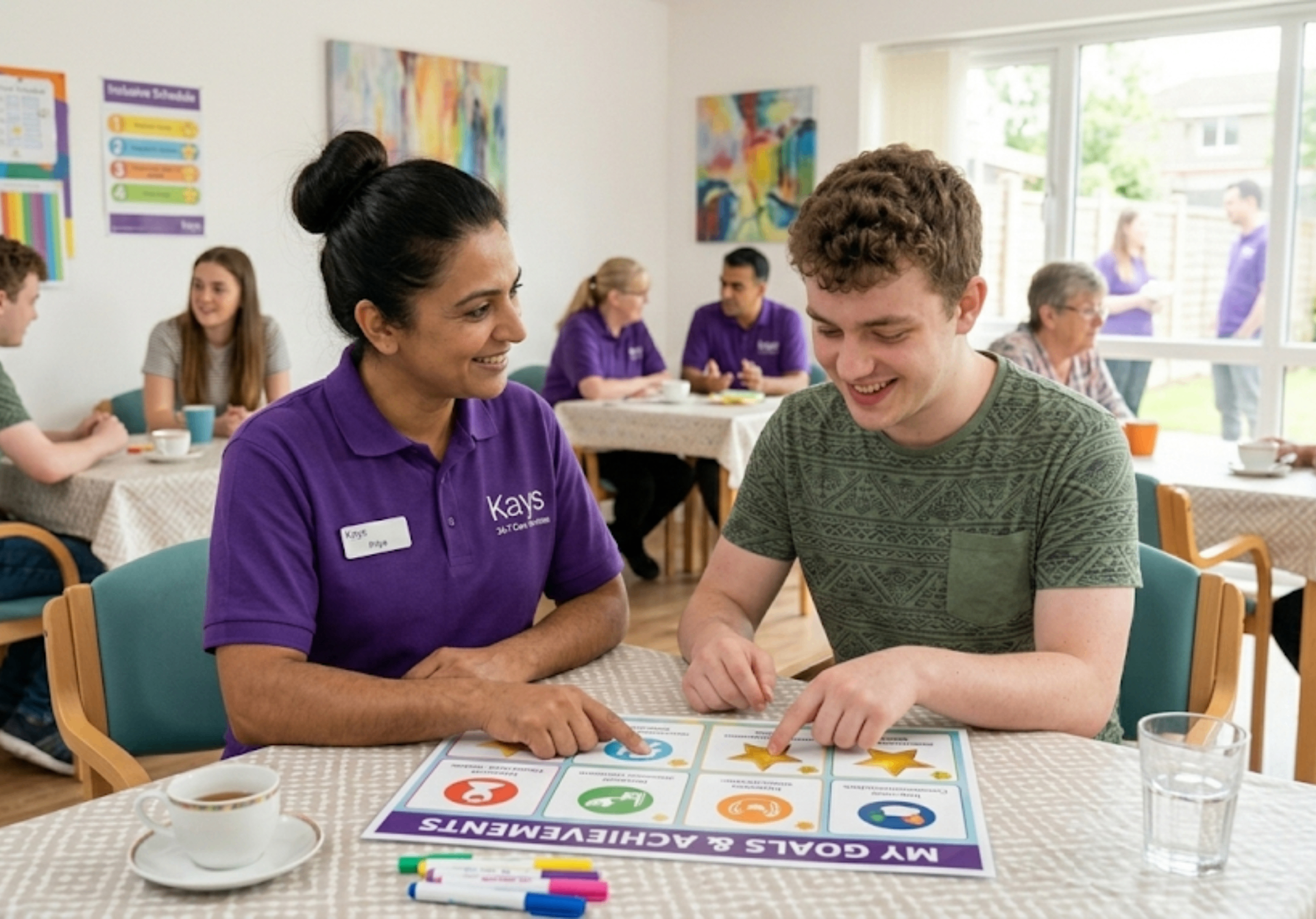
Our support plans are outcome-focused. That means we do not simply provide hours of support — we work towards clear, meaningful goals that the person has chosen for themselves. These goals are reviewed regularly, celebrated when achieved, and replaced with new ones as confidence grows.
Example goals our clients have set:
"I want to cook my own dinner three times a week"
We work alongside the person in the kitchen, teaching skills step by step, until they can prepare meals independently and safely.
"I want to join a football group in my community"
We help research local groups, accompany the person to their first sessions, and gradually step back as they build confidence and friendships.
"I want to manage my own money for everyday shopping"
We practise budgeting together, build familiarity with handling cash and cards, and support the person until they feel confident managing on their own.
Who We Support
Adults Living Independently or Semi-Independently
People living in their own home or a supported living setting who need regular support to maintain their tenancy, manage daily tasks, and stay safe and well.
Young Adults Transitioning from Children's Services
Individuals moving from children's services into adult care who need a smooth, supported transition with a focus on building independent living skills.
People with Complex Needs
Individuals with a learning disability alongside additional needs such as autism, epilepsy, sensory impairments, physical disabilities, or mental health conditions.
Families Seeking Support at Home
People who live with family members and need additional support to develop skills, access the community, and build a life beyond the family home.
Working Together
Families as Partners
We involve families as valued partners in the support plan — sharing information, listening to their insights, and keeping them updated on progress and any concerns.
Social Workers & Care Managers
We work closely with local authority care managers and social workers, providing regular reports, attending review meetings, and contributing to person-centred planning.
Health Professionals
We liaise with GPs, community nurses, psychologists, speech and language therapists, and other specialists to ensure the person's health needs are fully supported.
Consistent Staffing
Consistency is essential. We allocate a small, regular team of support workers so the person builds genuine, trusting relationships with familiar faces.
Frequently Asked Questions
Let Us Call You
Leave your details and a care advisor will call to discuss learning disability or autism support — no obligation.
Call us directly: 077 6145 2735
You May Also Be Interested In
Physical Disabilities & Mobility Support
Practical support for people with physical disabilities to live independently.
Learn MoreEnquire About Learning Disabilities & Autism
Fill in the short form and a member of our team will contact you within one working day to discuss your needs — no obligation.
Quick Enquiry
Regulated, Accredited, Trusted